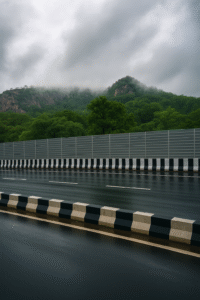
In a significant step toward balancing development and ecology, the National Highways Authority of India (NHAI) has successfully constructed a dedicated wildlife underpass on the Raipur–Nagpur stretch of NH-53, straddling the borders of Chhattisgarh and Maharashtra. This marks an exemplary integration of infrastructure and environmental responsibility.
🐾 Safe Passage for Wildlife
Strategically located in a sensitive wildlife zone previously threatened by vehicular movement, the underpass has been thoughtfully designed under the guidance of forest officials and ecological experts. It facilitates safe, unobstructed movement for species such as leopards, deer, jackals, and porcupines.
Key ecological features include:
- Preservation of natural terrain,
- Integration of native elements along the surface,
- Plantation of soft vegetation to maintain surrounding greenery.
🛣️ A Symbol of Green Highway Design
This underpass forms part of a broader initiative to make India’s national highways more biodiversity-conscious. During construction:
- Natural land contours were retained as much as possible,
- Sound control technologies were implemented,
- Locally sourced, eco-friendly materials were prioritized to minimize environmental impact.
🎥 Promising Early Signs
Camera traps installed at the site have already begun capturing wildlife activity, offering visual proof of the underpass’s success and reinforcing its importance for conservation.
🌍 Regional Benefits
The underpass is expected to benefit the Udanti–Sitanadi Tiger Reserve and adjoining forest zones near Dongargarh and Rajnandgaon. Beyond wildlife protection, it also promises smoother and safer traffic flow across the region.