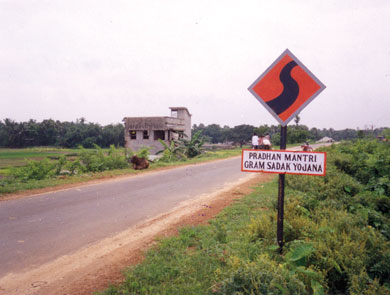
Launched on 25th December 2000 by then Prime Minister Atal Bihari Vajpayee, the Pradhan Mantri Gram Sadak Yojana (PMGSY) aimed to provide all-weather road connectivity to unconnected rural habitations. Over the years, the scheme has evolved not only in scope but also in its funding structure, reflecting India’s changing fiscal priorities and federal coordination.
💰 Phase-Wise Funding Evolution
| Phase | Launch Year | Funding Pattern |
|---|---|---|
| PMGSY-I | 2000 | 100% funded by Central Government |
| PMGSY-II | 2013 | 60:40 split between Centre and States (90:10 for NE & Himalayan states) |
| PMGSY-III | 2019 | Continued shared funding model with increased focus on consolidation |
| RCPLWEA (Special) | 2016 | Targeted funding for Left Wing Extremism-affected areas |
In 2015–16, following the 14th Finance Commission, the funding model shifted from full central sponsorship to a shared model, encouraging greater state participation.
🌍 Total Investment & Impact
- Total sanctioned road length: Over 7.8 lakh km
- Total investment: ₹3.44 lakh crore (approx. US$ 45 billion)
- Roads completed: Over 6.9 lakh km
- Habitations connected: More than 1.6 lakh villages
The scheme has been supported by:
- High-speed diesel cess
- Loans from NABARD
- Assistance from World Bank & ADB
- State government contributions
🧪 Technology & Sustainability
PMGSY has pioneered the use of green and innovative technologies:
- Waste plastic roads
- Cold mix and chemical stabilization
- Full-depth recycling
- Cell-filled concrete
More than 66,000 km of roads have been built using these sustainable methods.
🔍 Monitoring & Transparency
The OMMAS (Online Management, Monitoring and Accounting System) tracks every phase of road development—from proposal to completion. It ensures:
- Real-time progress updates
- Expense tracking
- Quality control compliance
📌 Challenges & Recommendations
- Delayed fund release from states
- Low-quality bidding practices by contractors
- Maintenance lapses post-construction
- Exclusion of habitations based on outdated census data
The Standing Committee on Rural Development has recommended:
- Inclusion of 2011 Census data
- Stricter quality control and contractor accountability
- Improved Centre-State coordination